Materials library
Good interiors start with what you don’t see.
The right material depends on where it is used.
Where there is water, the board has to tolerate moisture. Elsewhere, a stable core matters more than a waterproof label.
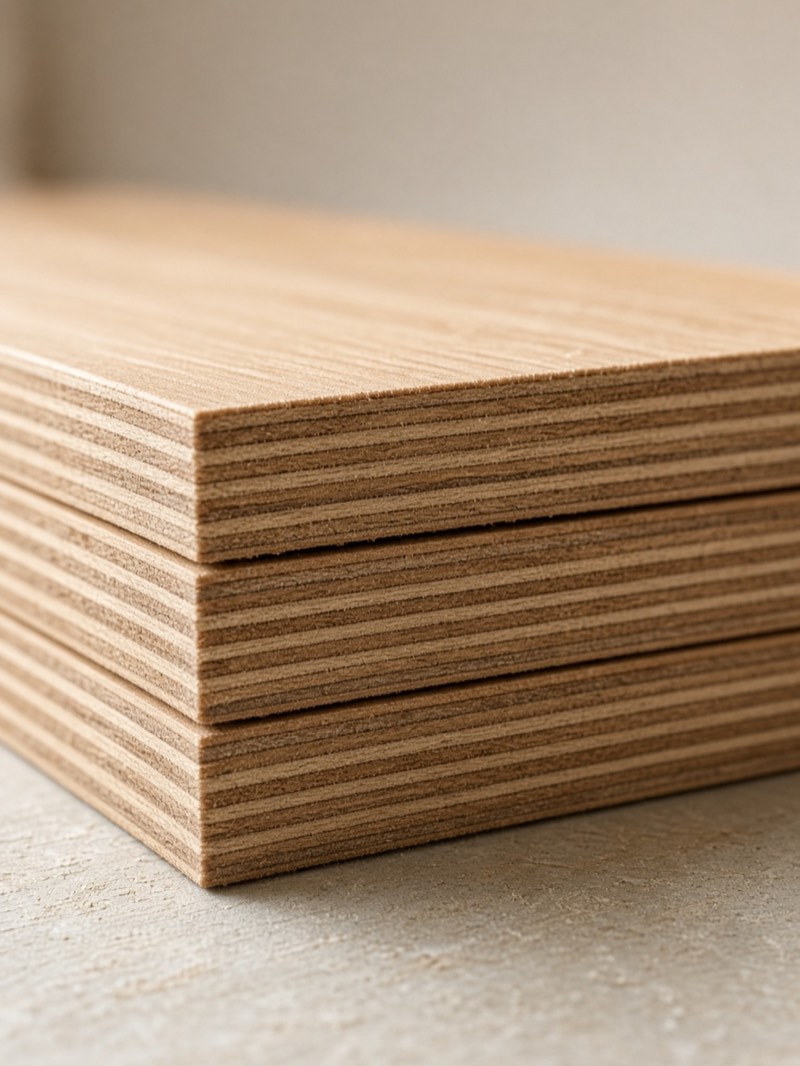 Concept
Moisture-tolerant board
- What it is
- A board chosen because it can stand damp air and the odd splash, not because the label sounds stronger.
- Where it works well
- The sink run, the hob splash, a bathroom, or any cabinet that lives near water.
- Where it may not
- A dry wardrobe or a study. Extra water resistance is not automatically better in a dry room.
- A practical note
- The stamp on the board matters less than whether that run actually gets wet.
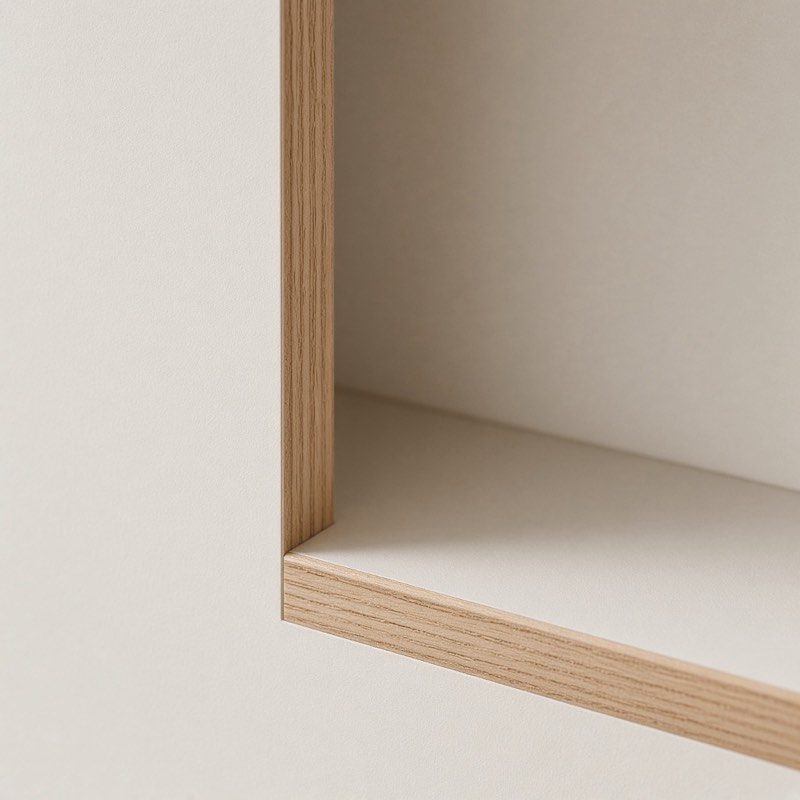 Concept
Stable-core board
- What it is
- A board chosen because it stays flat and holds a screw, not because it is waterproof.
- Where it works well
- Wardrobes, study tables, TV units, and the dry parts of a kitchen.
- Where it may not
- The wet side of a kitchen, or any place that stays damp.
- A practical note
- In a dry room, a stable core usually matters more than a waterproof label.
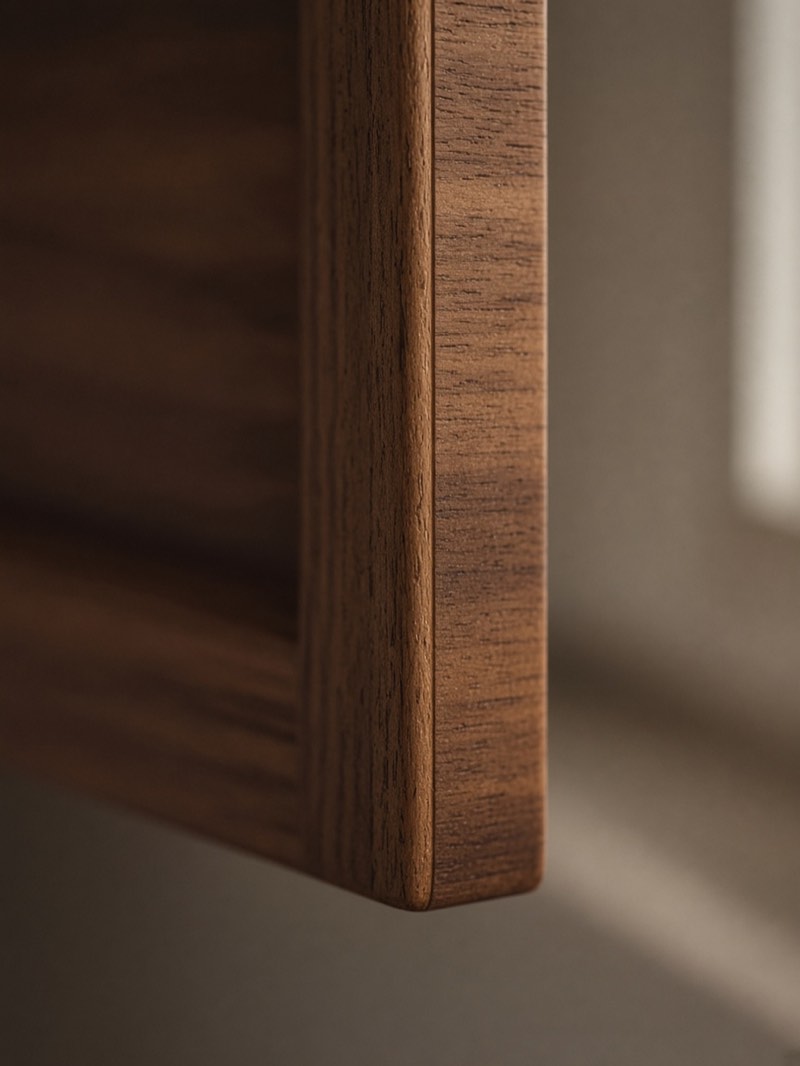 Concept
Edge band
- What it is
- A thin strip that covers the cut edge of a board, so the layers are not what you see.
- Where it works well
- Every visible edge of a shutter, shelf or carcass.
- Where it may not
- It will not hide a poorly cut board. The cut has to be clean first.
- A practical note
- The seam should not be the first thing you notice.
Laminate or membrane where the surface needs wiping. Veneer where you want the grain. The drawing says which is which.
 Concept
Laminate
- What it is
- A thin, wipeable sheet bonded to the face of the board.
- Where it works well
- Kitchens, children’s rooms, and any surface that is wiped often.
- Where it may not
- Where you want the feel and variation of real wood grain.
- A practical note
- The drawing should name it, so you know it is laminate before it is made.
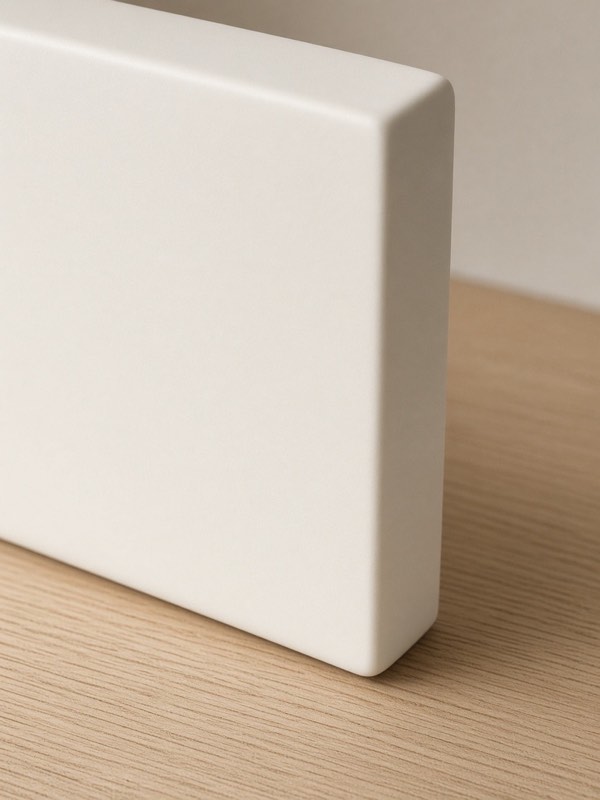 Concept
Membrane
- What it is
- A pressed wrap that covers the face and, often, the profile of a shutter.
- Where it works well
- Shutters that need a smooth, wipeable face, including ones with a little shape.
- Where it may not
- A stand-in for named wood grain, if that is what you asked for.
- A practical note
- Same rule as laminate: it is named on the drawing.
 Concept
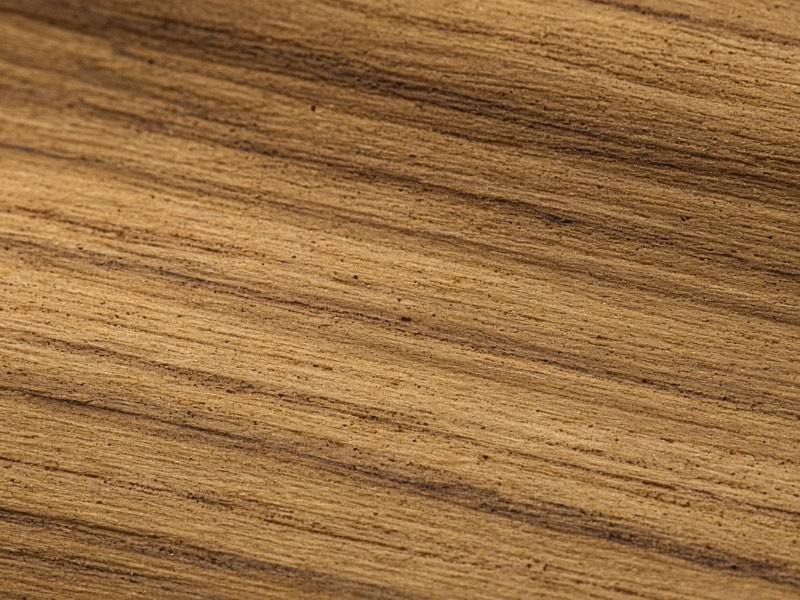
Veneer
- What it is
- A thin slice of real wood, laid on the board so you see the grain.
- Where it works well
- Living rooms, wardrobes, and places where the grain is part of the room.
- Where it may not
- A wet counter, or a surface that is scrubbed every day.
- A practical note
- Grain varies from sheet to sheet. That is the point of veneer, not a flaw.
Hinges and channels loosen with daily use. We fit ones that can be adjusted after installation.
 Concept
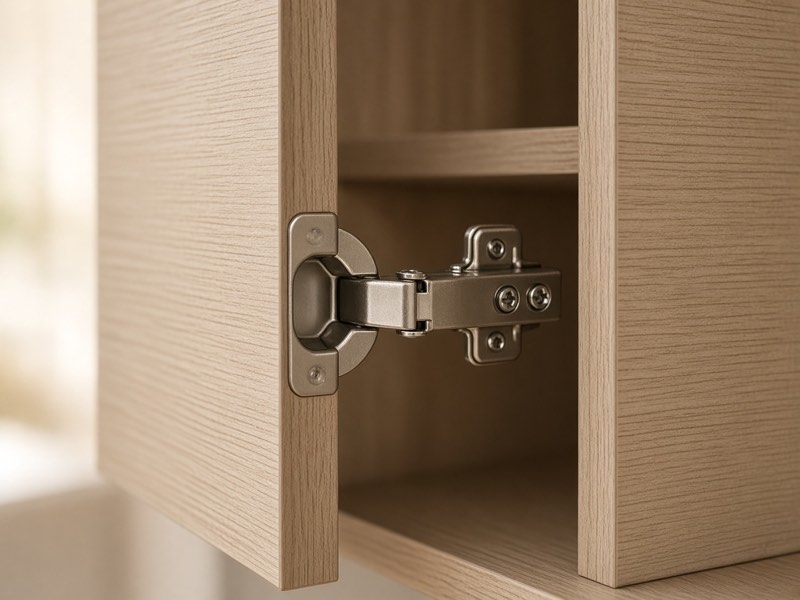
Hinges
- What it is
- The fitting that lets a shutter open, and that can be set so the gap stays even.
- Where it works well
- Every shutter that has to open and close for years.
- Where it may not
- A hinge that cannot be adjusted will not stay true after the wood moves a little.
- A practical note
- Hinges loosen with use. They should be ones you can reset after installation.
 Concept
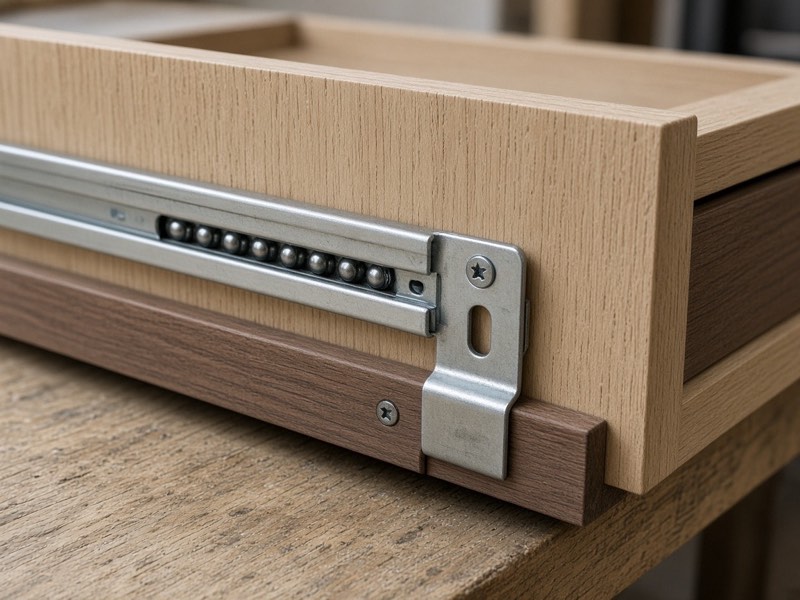
Drawer channels
- What it is
- The runners that carry a drawer in and out.
- Where it works well
- Drawers used every day — kitchen, wardrobe, study.
- Where it may not
- A light runner under a heavy drawer will sag or scrape.
- A practical note
- The channel has to match the weight of what you put in the drawer.
 Concept
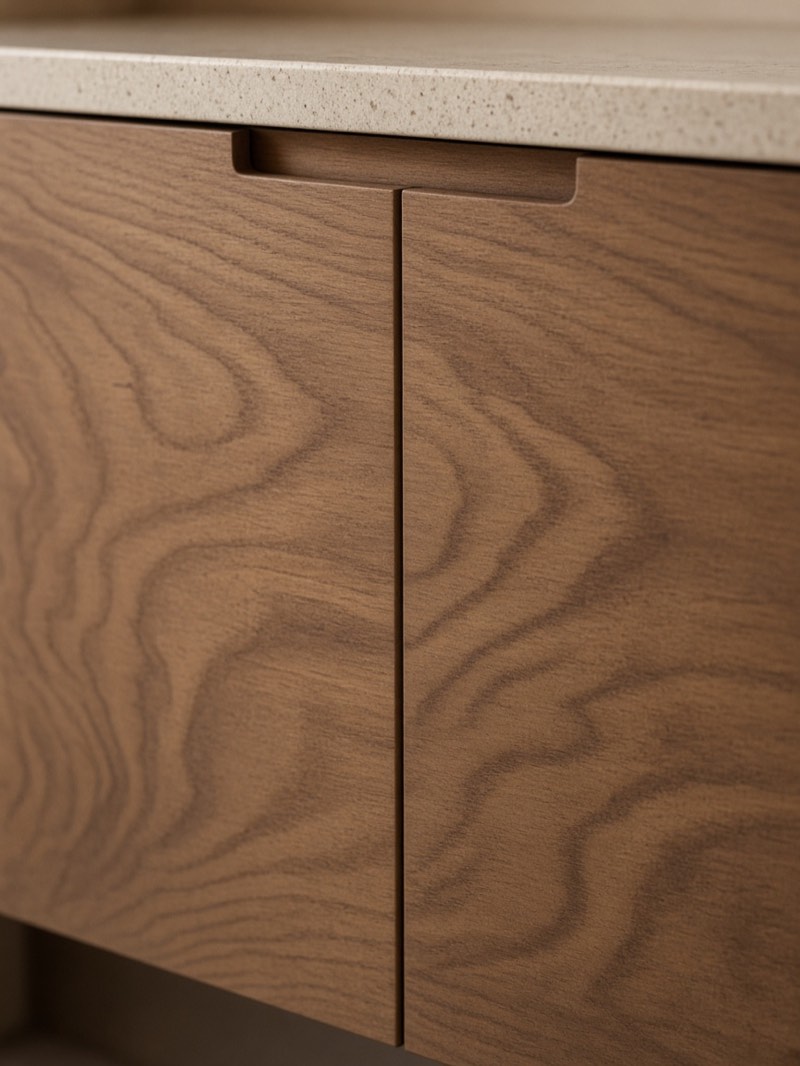
Handles and finger pulls
- What it is
- How you open the shutter — a handle, or a groove you catch with a finger.
- Where it works well
- Wherever you reach every day. A finger pull keeps the face quiet.
- Where it may not
- A small pull on a tall, heavy shutter can be awkward to use.
- A practical note
- Chosen with the drawing, not after the shutters arrive.
Get my free design and quote

